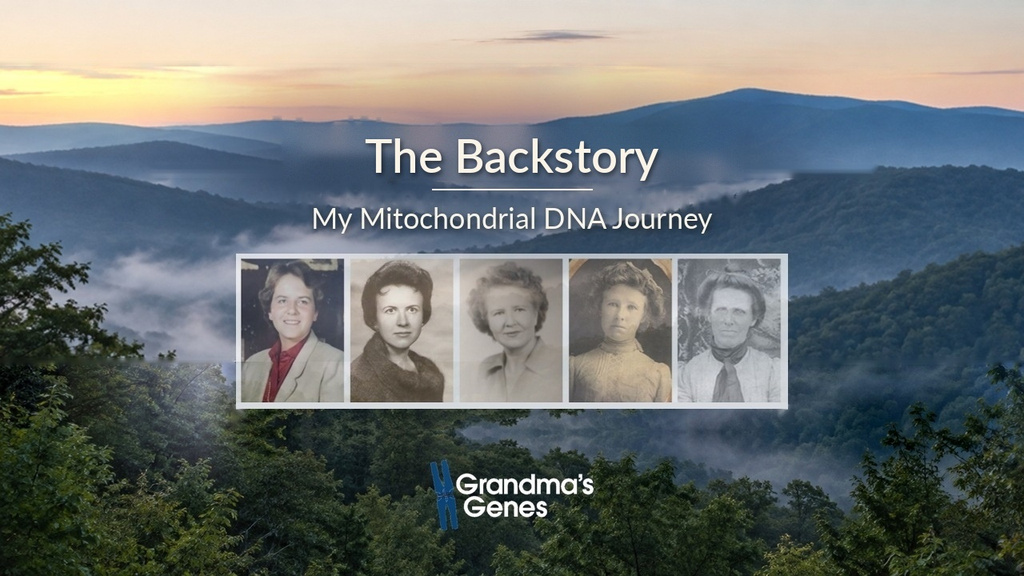
My Appalachian family history began with the stories my grandmother, Eunice Dean Lord, shared as we sat with her scrapbook. Through her photographs and memories, I came to know my Dillard roots in Rabun County, Georgia, and the families whose lives shaped my own. But there were parts of that history she rarely discussed—and questions that eventually led me to take my first DNA test.
Eunice
Eunice Dean Lord was born April 23, 1906 to Nola Ellen Dillard and Richard (Rich) Carlton Lord.
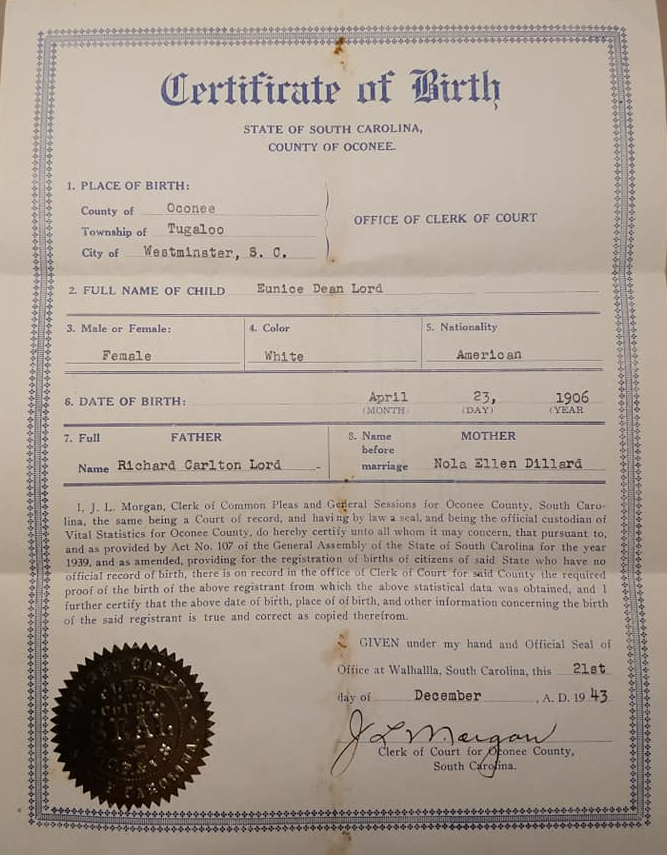
Eunice rarely talked about her immediate family. She mentioned a sister named Grace who lived in Asheville, North Carolina. Grace had hosted her wedding, and Grace’s husband had officiated. She did, however, talk about her extended family. Growing up, I spent many a day sitting beside her as she showed me a scrapbook chock-full of pictures of her Dillards.
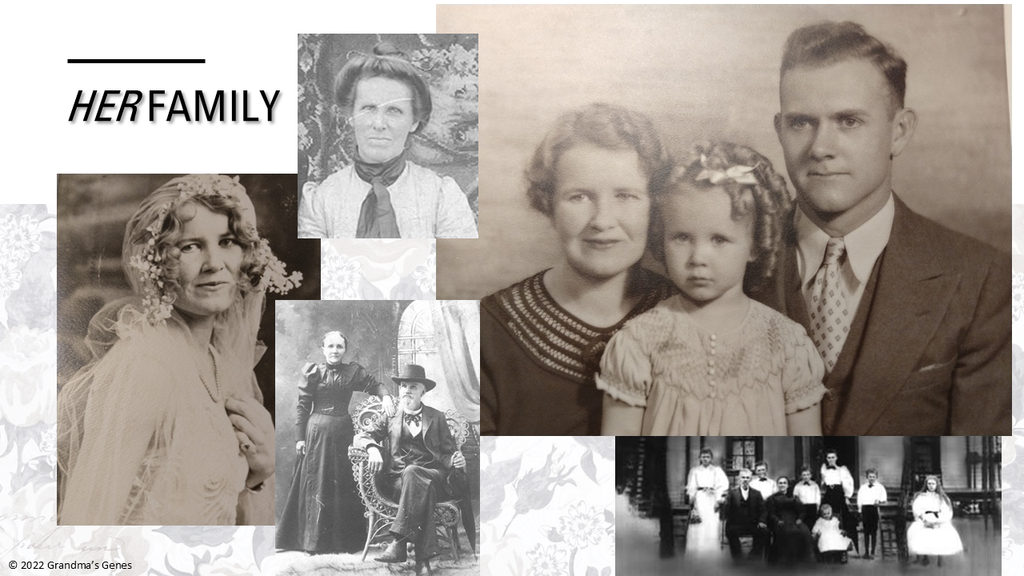
From all those hours spent with my grandmother’s scrapbook, I grew up knowing I was a Dillard from Rabun County, Georgia. I knew I was a Lord and a Welborn and a Sims and a Hall. I was also an Appalachian, though this wasn’t something my grandmother named, per se. My grandmother wove our Appalachian identity into the family history she taught me..
Being Appalachian is also a thread running through my life beyond the mountains of Georgia. It is there in my birth in Greenville, South Carolina—yes, in Appalachia—and in a childhood spent roaming, hiking, creek walking, tubing, rafting, and skiing in the Blue Ridge Mountains and their foothills. I have always gone into the mountains just to “be.”
For Eunice, those mountains were home to a family of substance. A family with a proud tradition of faith and upright living.
But things changed. As families grew and older ways of making a living became harder to sustain, people went where the jobs were. For Eunice’s family, that meant the cotton mills of the Southeast.
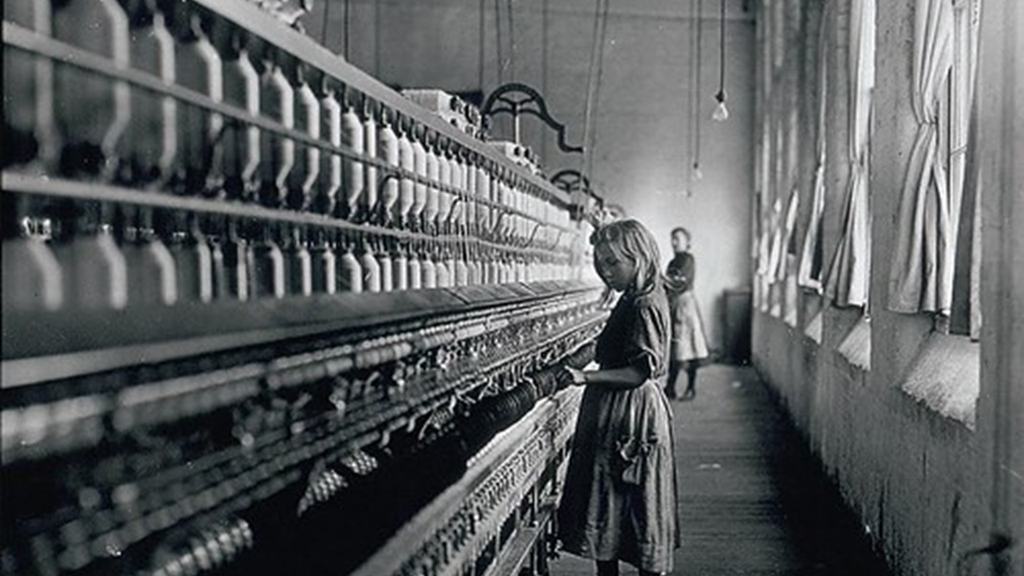
In the early 1900s, cotton mill work often meant grueling ten- to twelve-hour workdays, deafening machinery, choking dust and lint, overwhelming heat, and low wages. Entire families—including children—worked in the mills, and many lived in company-owned mill villages, The factory schedule governed their daily lives. American Historical Association
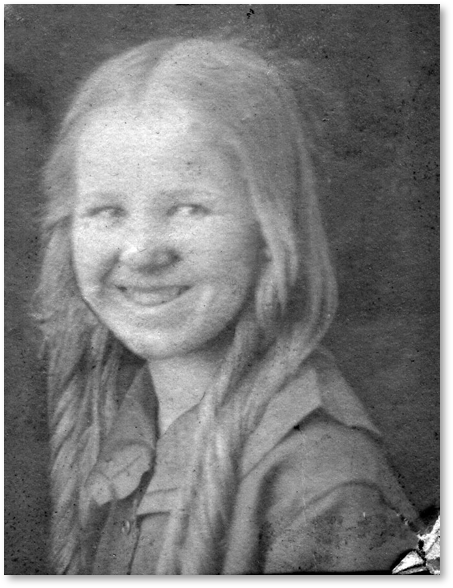
This was not the history Eunice taught me. These were not the stories she told. This was not what she wanted us, my siblings and me, to carry forward from her past.
Until…